
Lutron Grafik Replacement: From Fading Systems to Fully Connected Spaces

Across homes, hotels, and commercial spaces, centralized lighting systems such as the Lutron Grafik once set the standard for scene-based control. But today, many of these systems are reaching Lutron End of Life. Fading displays, failing components, and limited support are becoming part of daily operations. As expectations for comfort, efficiency, and flexibility evolve, building owners are moving past traditional Lutron Grafik systems in favor of a smarter, more future-ready approach.
For many, this moment doesn’t come as a surprise. Systems like Lutron Grafik 5000/6000, Lutron Grafik 7000, and Grafik QS are now formally entering end-of-life phases, making long-term support increasingly uncertain.
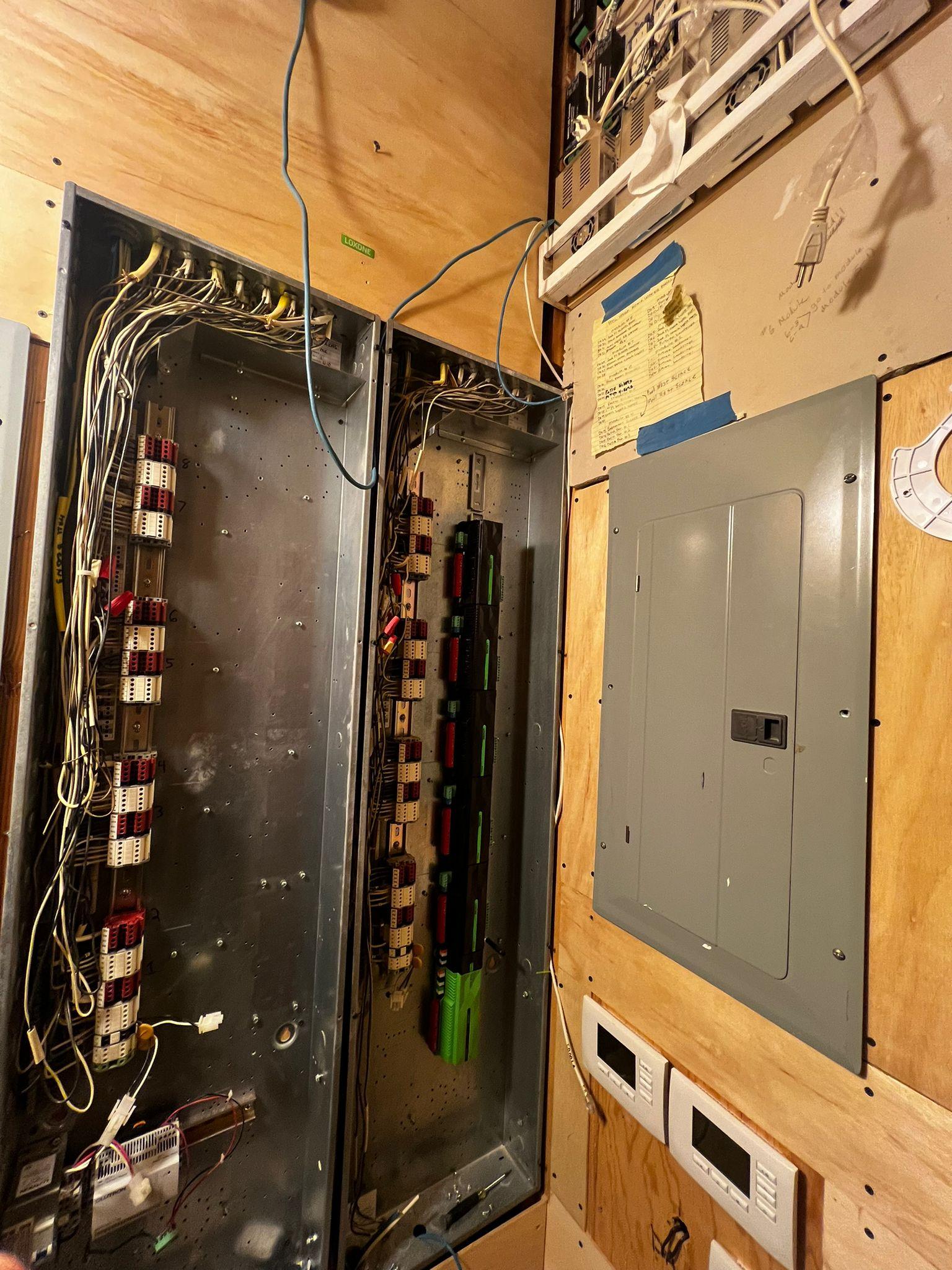
When Lighting Control Starts Holding You Back
In commercial environments, lighting control isn’t just about comfort, it’s about consistency, uptime, and cost control. And that’s where aging Grafik systems start to show their strain.
A space goes partially offline. A row of lights won’t dim or even turn on. A keypad stops working. Staff members report inconsistencies. What used to be a stable system now requires more frequent service calls, patch fixes, and workarounds.
What once supported your daily operations starts to interrupt them. Step by step, it becomes harder to adapt. Changes in Grafik QS are limited or no longer possible. Spare parts disappear. And while the building evolves, lighting stands still. And the question shifts from fixing what’s there to finding a true Lutron Grafik Replacement.
What a Modern Lutron Grafik Replacement Should Deliver
When you start looking beyond a Lutron Grafik or any short-term end of life lighting fix, something becomes clear. It’s not just about lighting. It’s about how a building feels and evolves over time. A real Grafik Replacement prepares the space for everything that comes next.
At the same time, understanding product lifecycle becomes critical. Knowing when lighting systems reach their end of life allows you to act before reliability is impacted. Lutron conveniently provides free to the public guides for both their Commercial Product Lifecycle Policy and their Residential Product Lifecycle Policy.
What truly matters reveals itself in everyday use:
- A system that stays supported long term, not approaching end-of-life
- Functionality that grows instead of limiting what’s possible
- Flexible installation for retrofit or new build projects
- Clean, refined controls that match the architecture
- Seamless integration with shading, climate, audio, and access
- One unified experience instead of fragmented systems
This is where the difference between a simple Lutron Grafik alternative and a real system-wide approach becomes clear.
A Lateral Move: What Lutron HomeWorks Solves and What It Doesn’t
For many, upgrading from a Lutron Grafik system leads naturally to Lutron HomeWorks, and for good reason. It’s a platform backed by decades of innovation from Lutron Electronics, with a reputation built on reliability, design, and performance in both commercial and high-end residential spaces. It feels familiar because it is refined, proven, and trusted.
On the surface, it delivers. The interfaces are polished, the keypads are thoughtfully designed, and the overall user experience reflects the level of quality you’d expect from a premium lighting control system. For many projects, it represents a clear and confident step forward from a Grafik QS installation.
For those already considering this path, Lutron provides a well-defined upgrade route. But it remains purpose-built. It works well in lighting and shading, but that’s also where it stops. Other systems like climate, energy, audio, and access typically sit alongside it rather than within it. They can be integrated, but not inherently unified.
That’s the distinction. HomeWorks is a strong, well-executed upgrade for lighting control. But it doesn’t fundamentally change how the building operates as a single, connected system.
Rethinking the System: How LOXONE Solves It As One
A true Lutron Grafik Replacement changes the conversation entirely. When you move from a Lutron Grafik system to LOXONE, lighting is no longer an isolated function. It becomes part of a connected building system that includes climate, shading, energy, audio, and access, all working together as one.
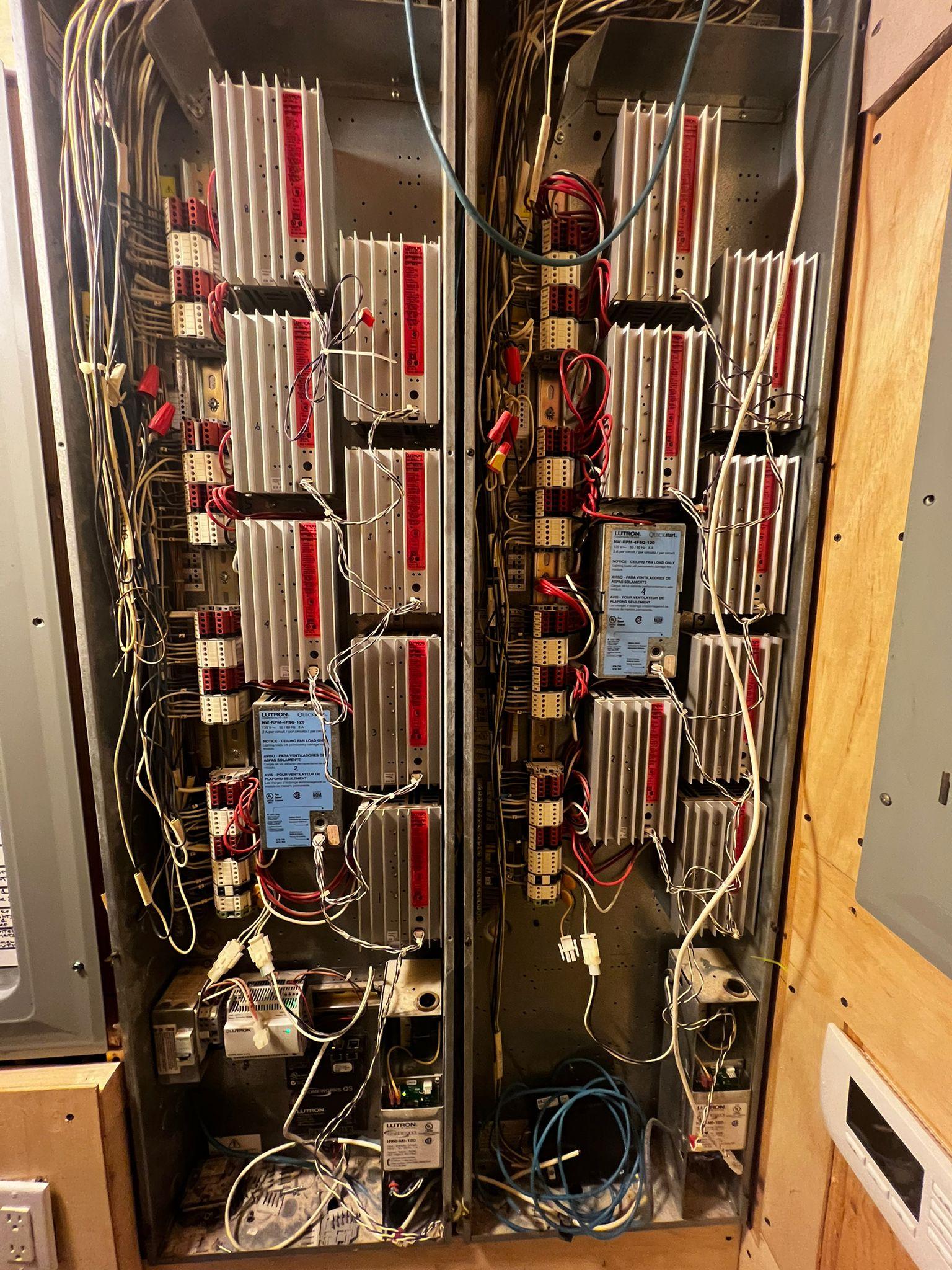
At the center of every control system is its “brain.” In a Grafik setup, that role is handled by the controller. It’s reliable, purpose-built, and designed to manage lighting scenes with precision. It does exactly what it was built to do, and it’s done that job well for years.
With LOXONE, that concept is expanded through the Miniserver. Instead of focusing on a single function, it acts as the central intelligence for the entire building. Lighting is just one part of the equation, alongside climate, shading, energy, audio, and access, all coordinated from the same core.
What once required multiple controllers, integrations, and handoffs between systems is consolidated into one unified platform. The Miniserver doesn’t just execute commands; it continuously manages how the building behaves in the background. So while a Grafik controller serves as a dependable brain for lighting, the Miniserver operates as the brain for the building as a whole.
Plan Your System Replacement Project
Lutron vs LOXONE – At a Glance
| Feature | Grafik (5000/6000 / 7000 / QS) | Lutron Upgrade | LOXONE |
| Scope | Lighting only | Lighting focused | Whole building |
| Automation | Limited | Moderate | Full |
| Integration | Low | Medium | High |
| Access | None | None | Fully Integrated |
| Audio | None | None | Fully Integrated |
What Moving from Lutron to LOXONE Actually Looks Like
Replacing a Grafik 5000/6000, 7000, or QS system follows a defined process. Most installations reuse existing wiring infrastructure, keeping disruption and cost predictable, and unlike Lutron, there are no ongoing software subscriptions or licensing fees.
Step 1: System Audit
Step 2: Scope and Design
Step 3: Keypad and Load Replacement
Grafik keypads are replaced with LOXONE Touch Pure or Touch Pure Flex units in the same locations. Existing wiring transfers to LOXONE hardware, Dimmer or Relay Extensions, or protocols like DALI, DMX, or RGBW, based on fixture types. In commercial settings, work progresses room by room or floor by floor to maintain operations.
Step 4: Commissioning
The Partner programs the Miniserver with defined logic: occupancy schedules, scenes, HVAC setpoints, and energy rules. The building becomes more responsive – lighting, shading, and HVAC adjust automatically. The LOXONE app (free, no subscription) provides full control from any device.
Step 5: Handoff and Expansion
Remote access enables monitoring and adjustments without site visits. More importantly, the system has become a platform. Audio, EV access control, and energy management can be added over time without replacing the core. What starts as a lighting upgrade evolves into a unified, subscription-free building system.
Real-World Lighting Control in Practice
These examples show how a Grafik Replacement becomes tangible in real spaces. Each demonstrates how lighting moves from isolated control to part of a living system and how a Lutron Grafik alternative becomes something far more complete.
Elevate Your System Beyond Lutron Grafik
If your Lutron Grafik, whether Grafik QS, 7000, or 5000/6000, is approaching its end of life, this is the moment to act before limitations impact your space. And it’s not just Lutron, LOXONE supports many other outdated centralized lighting systems as well including LiteTouch, Touche, and more!
A modern Lutron Grafik Replacement with LOXONE brings lighting, shading, audio, access, HVAC, and more into one unified system, designed to work quietly in the background and adapt to the way people actually use a space.
Let’s explore what true building automation with LOXONE can look like for your building.
Your free project consultation
Looking to replace or modernize your existing lighting system but not sure where to start? Our LOXONE professionals will guide you through your options – completely free of charge and with no obligation.